MEMORY & IMAGINATION
We started as a small interior design firm in downtown Michigan, aiming to help home buyers make do with the new space that they had acquired. It soon became obvious that it would make sense to help our clients see beyond the walls and floor plans and be there with them from the get-go. Currently, we offer house realtor, interior design, and architecture services in order to help our customers find their forever homes as seamlessly and painlessly as possible.
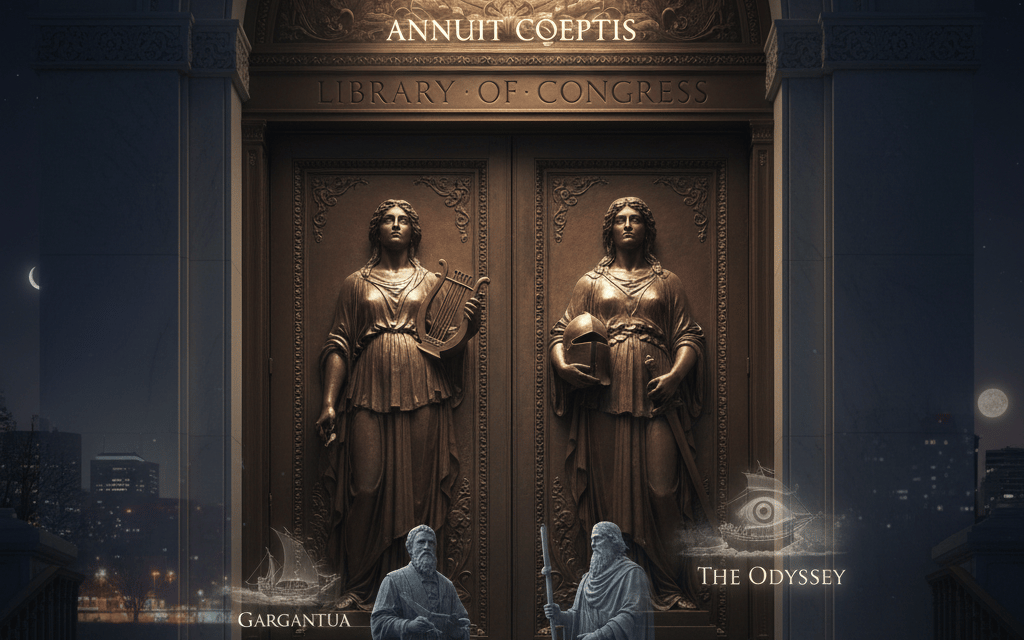
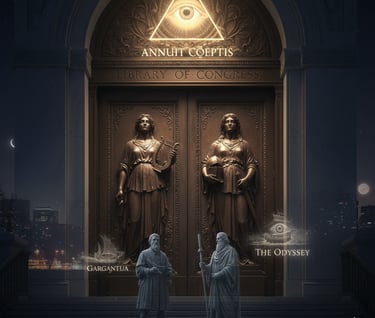
In the context of Olin Stephens—the legendary yacht designer—the "Doors to Congress" story is a poignant metaphor used to illustrate the delicate balance between Memory and Imagination in the creative process.
Stephens often reflected on how his designs were not just products of cold calculation, but of a mental architecture where these two forces interacted.
The Metaphor of the Two Doors
Imagine a grand hallway leading into the "Congress" of the mind, where all creative decisions are debated and finalized. To enter this hall, one must pass through two distinct doors:
1. The Door of Memory
This door represents everything we know to be true based on the past.
The Foundation: It houses data, proven physics, previous successes, and—perhaps most importantly—previous failures.
The Guard: Memory acts as a filter. It prevents us from "reinventing the wheel" or repeating catastrophic mistakes. It provides the stability and tradition required to build something that actually works.
2. The Door of Imagination
This door represents the realm of the "not yet possible."
The Catalyst: It is where intuition, "what if" scenarios, and radical departures from tradition live.
The Risk: Without the counterweight of Memory, the Door of Imagination can lead to designs that are beautiful or revolutionary but ultimately non-functional or structurally unsound.
The "Congress" of Design
The "story" lies in the meeting of these two. Stephens believed that a truly great designer must allow both doors to remain open simultaneously.
If you only listen to Memory, you become a copyist—stagnant and unable to evolve. If you only listen to Imagination, you become a dreamer—creative but untethered from reality.
In the "Congress" of a project, Memory provides the rules, while Imagination provides the exceptions. For Stephens, the magic of a world-class racing yacht happened when a flash of imagination was tempered and refined by the deep, stored memory of the sea's behavior.
"The designer's problem is to find a path between the known and the unknown."
Would you like me to look into how this philosophy specifically applied to the design of his most famous 12-meter yachts?


In Olin Stephens’ philosophy, the figure of Imagination is not just an abstract idea, but a classical personification inspired by his appreciation for art and the timeless nature of creativity.
The specific inspiration for Imagination—and why she holds a lyre—stems from the traditional imagery of the Muses in Greek mythology.
Why the Lyre?
In the "Doors to Congress" metaphor, the lyre represents Harmony and Rhythm.
The Instrument of Apollo: In classical tradition, the lyre is the instrument of Apollo (the god of logic and order) and the Muses (the sources of inspiration). By giving Imagination a lyre, Stephens suggests that true creativity isn't chaotic; it is attuned to the laws of nature.
The Song of Design: A yacht, like music, must be "in tune" with the elements. The lyre signifies that Imagination provides the "melody" or the vision of the boat, while Memory (the other door) provides the structural "tempo" and technical constraints that keep the song from falling apart.
Resonance: Just as a lyre's strings must be perfectly tensioned to produce a clear note, a design must have the right tension between what is dreamed and what is physically possible.
The Inspiration
Stephens was deeply influenced by the idea that yacht design was a form of Fine Art. He viewed the "Congress of the Mind" as a legislative body where Memory (the voice of experience and data) and Imagination (the voice of beauty and "the new") had to reach a consensus.
He saw Imagination as a feminine figure holding the lyre to emphasize that design should be lyrical—it should have grace and flow. To him, a boat that was purely "logical" (all Memory) was soulless, but a boat that was purely "imaginative" was a silent instrument. The lyre is the bridge—it is a physical object (Memory/Matter) that produces an ethereal, beautiful sound (Imagination/Spirit).
Would you like to know more about how Olin used this "Memory and Imagination" balance when he was refining the lines of the famous Dorade?
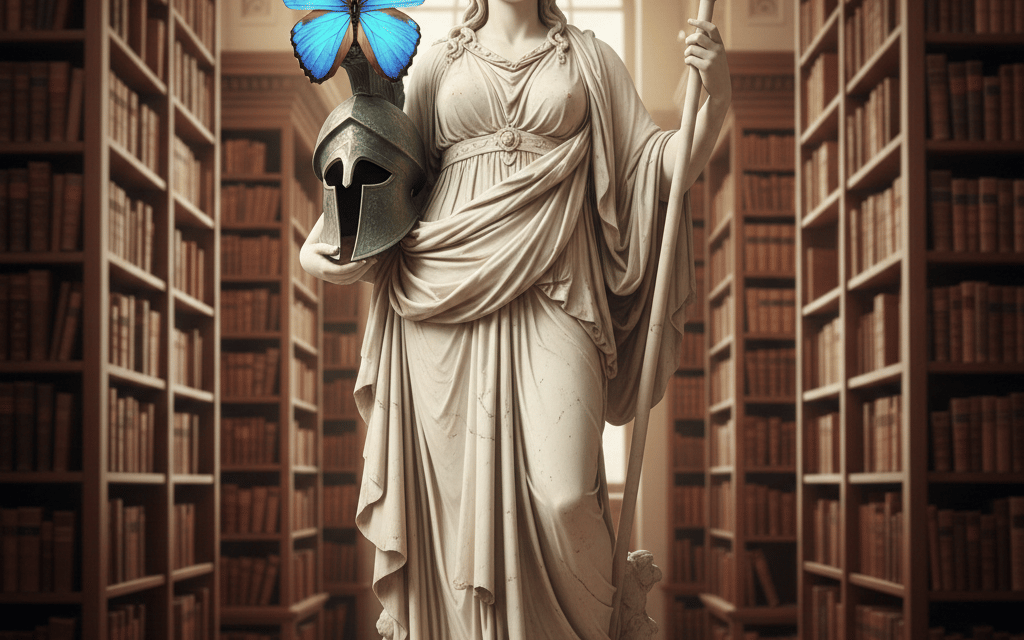
In Olin Stephens' metaphorical "Congress of the Mind," Memory is personified as a figure of strength, preservation, and defense. While Imagination holds a lyre to represent the song of creation, Memory is depicted holding a helmet for very specific, symbolic reasons.
The Symbolism of the Helmet
The helmet identifies Memory with Athena (Minerva), the goddess of wisdom, craft, and strategic warfare. For a yacht designer like Stephens, Memory wasn't just about "remembering"; it was a tactical tool.
Protection Against Error: The helmet represents the "hard-earned" lessons of the past. In the treacherous environment of the ocean, Memory acts as a shield. It protects the designer from repeating dangerous mistakes or structural failures that have already been documented in history.
The Weight of Reality: Unlike the light, airy nature of the lyre, a helmet is heavy and grounded. It symbolizes the "weight" of facts, physics, and empirical data. It reminds the designer that the sea is a physical force that requires a "sturdy" mind to navigate.
Structure and Form: A helmet is a rigid container. In this story, it represents the "framework" into which the wild ideas of Imagination must fit. Without the "helmet" of Memory to contain and shape the vision, the design would have no structural integrity.
The Inspiration: Wisdom vs. Inspiration
Stephens drew this distinction to show that design is a "legislative" process between two different types of intelligence:
PersonificationAttributePurposeImaginationThe LyreRepresents the Aesthetic and the "What If."MemoryThe HelmetRepresents the Technical and the "What Is."
Export to Sheets
Stephens believed that Memory must be "armed" with a helmet because the designer is in a constant battle with the elements. To him, the helmet signified that the wisdom of the past is the best defense against the unpredictability of the future.
He often felt that if a designer walked through the Door of Imagination without first consulting the figure with the helmet, they were essentially going into "battle" (the sea) unprotected.
Would you like me to find some specific examples from Olin's journals where he describes how "Memory's helmet" saved a design from being too experimental?