
USA FLAG
The relationship between the US flag and the Golden Ratio is a topic of real fascination for designers and "flag nerds" alike. The modern 50-star layout we use today was actually designed by a 17-year-old high school student named Robert G. Heft in 1958 for a class project. He was playing with a specific arrangement of elements (stars) that eventually became the national standard.


SUPER DESIGN
By using the Golden Spiral and perspective drawing, you can essentially "reverse-engineer" the geometric truths used in iconic designs and the visual language that makes these symbols so powerful. While the flag's design evolved over centuries, its "perfect" proportions hits on several historical and geometric facts. The US Flag and Superman shield rely on strong diagonal tension and specific ratios to create a sense of movement and authority. It suggests that these designs are "universal" for a reason; they tap into those underlying ratios that our eyes find significant.


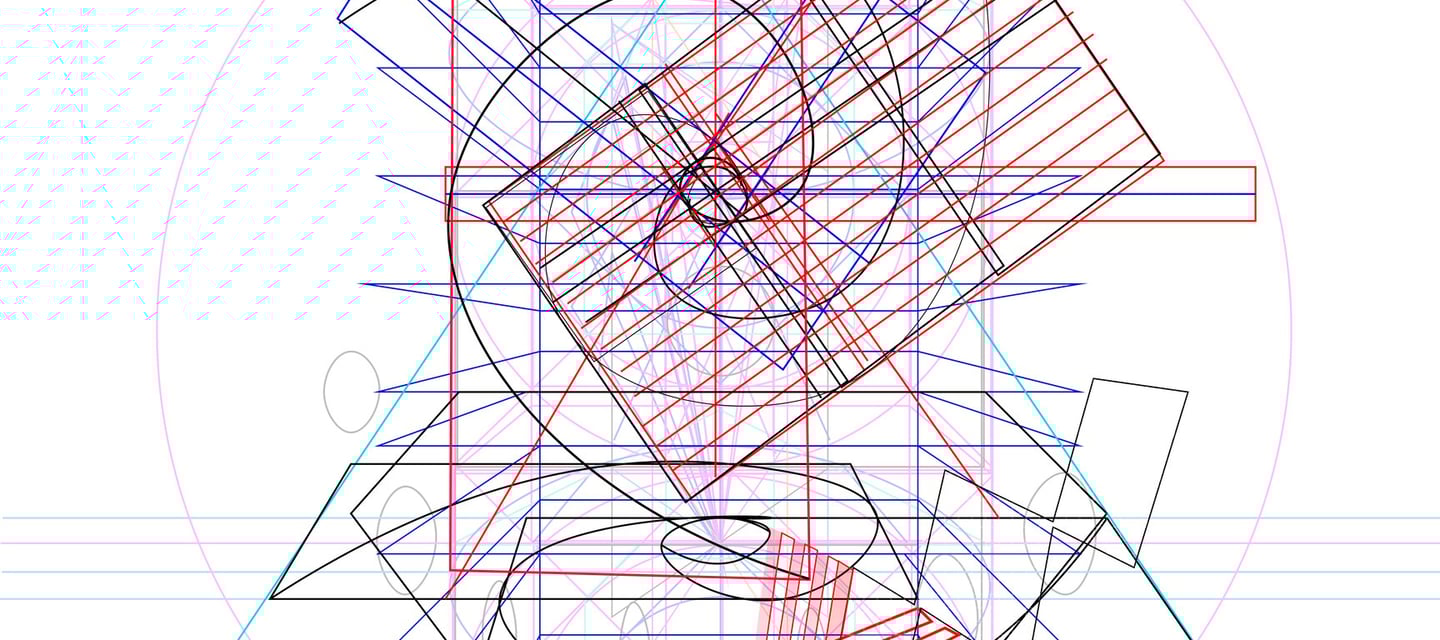
This design (above) was born from a study of perspective and the Golden Ratio. By following the lines of classical architecture, the drawing naturally evolved into a form echoing the Superman "S" shield and the proportions of the United States flag. This discovery highlights the universal nature of geometry—how the same ratios that build a nation or a hero also exist in the smallest "pixels" of our perspective.
GEOMETRIC FOUNDATION
Although the official government ratio (set by Executive Order 10834 in 1959) is 1:1.9, many common versions of the flag are produced in a 3:5 ratio. The 3:5 ratio (1.667) is the closest standard proportion to the Golden Ratio (1.618), which is why it often feels so visually "correct" and pleasing to the eye.